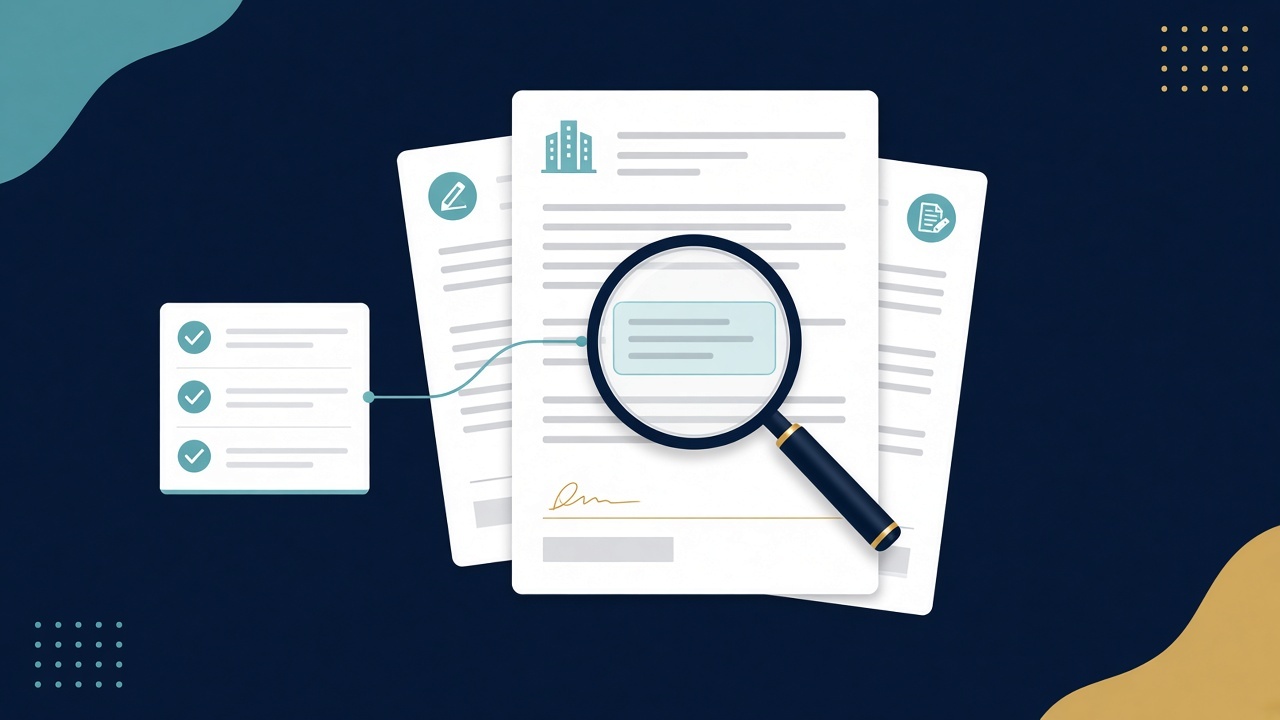
If you can't see where an AI tool got a number, you have to go back to the source document to check it, and most of the time you saved is gone. In CRE, where a misread recovery cap or co-tenancy trigger affects real money, I think every extracted field needs a link back to the exact place in the lease it came from.
The problem with the chat box
Horizontal AI tools like ChatGPT and Claude have made the empty chat box the default way to use AI. You describe what you want, hand over your files and get back a report or a spreadsheet. For low-stakes work, and for people with the patience to keep re-prompting, that works well.
The weak point is accountability. These tools are sold on speed and autonomy, and accuracy is handled by a footer disclaimer saying the model can make mistakes and important information should be checked. A mistake in a draft marketing email gets fixed by whoever reads it. A misread recovery cap in an acquisition goes straight into the underwriting.
Think about someone underwriting, diligencing or managing a lease portfolio. Accuracy matters more to them than speed. If they have to open the original 150-page lease every time to double-check what the AI entered, the software hasn't saved them anything. It has added a step.
CRE teams are also cautious about new technology, for good reason. One hallucinated number is enough for a team to go back to its manual process, and frankly I understand why.
Structured fields with a source on every one
What we think works better is a structured grid in place of the chat box, built on three things:
- Standard extraction. The key CRE fields are pulled into columns by default, so nobody has to work out what to ask from scratch.
- A paper trail. Every cell, number or clause links to the page, paragraph and line in the source document it came from.
- Something to do with the data. Once fields are verified, you can run calculations on them or push them into the systems your team already uses.
How we built Elysium around this
When we started designing Elysium, it was clear that CRE teams didn't need another chatbot. They needed to be able to check the data.
Our customers use extracted document data to make large financial decisions, so data quality comes first. In Elysium every extracted data point connects back to its source text. If Elysium flags a recovery cap or a termination right, someone on the team can verify it in one click without leaving the workflow or digging through a separate PDF.
Ellis Realty Advisors uses Elysium this way to answer buyer questions on a medical office condo, with every answer pointing to the document and page it came from (case study).
My view is that if an AI tool can't show you where an answer came from in your own documents, you shouldn't be relying on it for underwriting or asset management.
You can read more about how Elysium works here.
Joe Leach
Founder & CEO
Elysium
www.elysium-cre.com