How to Verify CAM Charges Against Your Lease Terms: A Practical Checklist

Joe Leach
How to Verify CAM Charges Against Your Lease Terms: A Practical Checklist
10:43
The short answer
To verify CAM charges, check the landlord's annual reconciliation statement against the lease, line by line, in this order: the tenant's pro rata share and its denominator, the base year or expense stop, any caps (and whether they apply to controllable expenses only), gross-up, excluded costs, administrative or management fees, and the dates that govern when the statement is due and how long the tenant has to dispute or audit it. Most disputes trace back to one of those terms being applied differently from how the lease, including every amendment, actually reads.
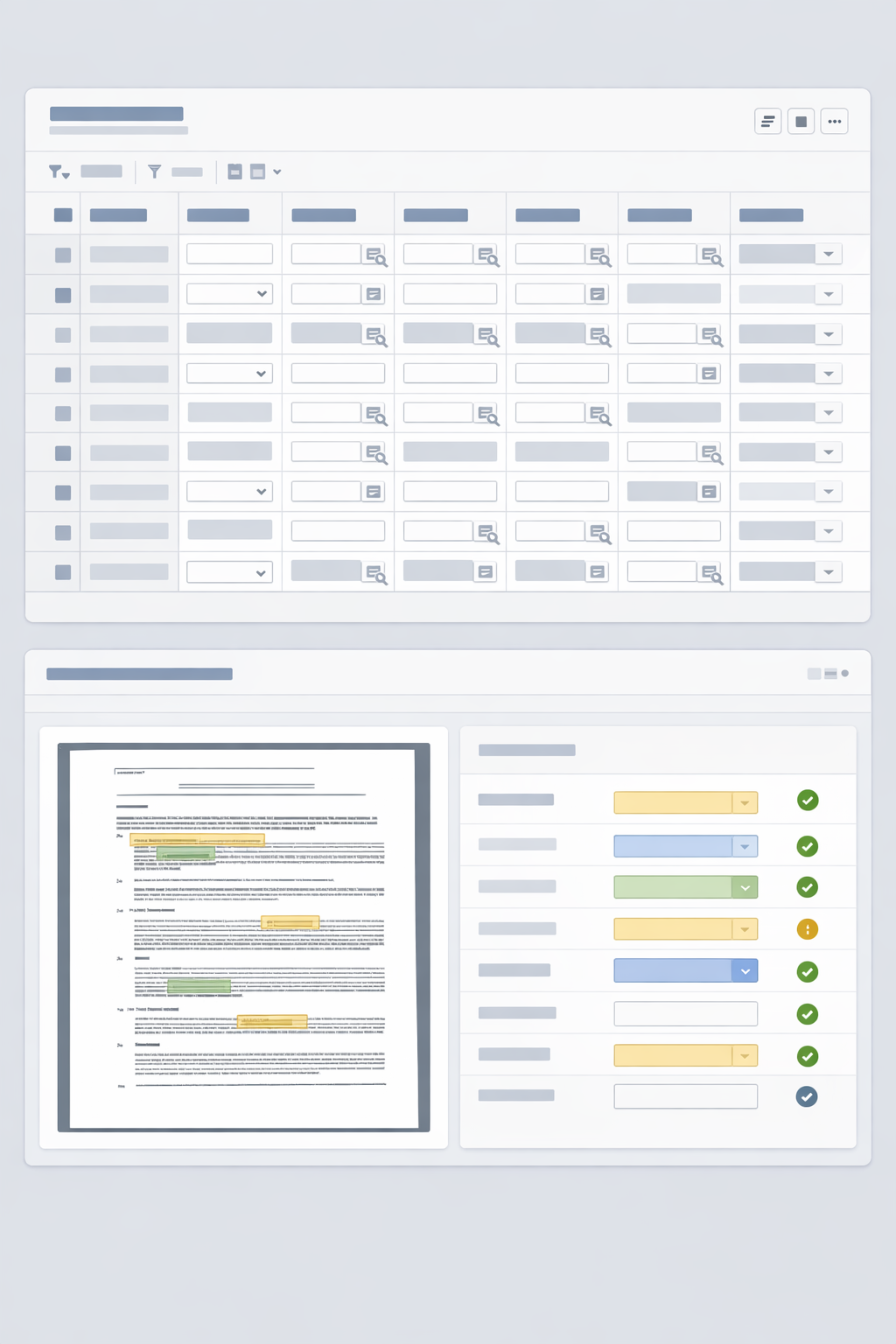
The work gets faster when the lease terms are already pulled out in a structured form with the clause and page cited, so each check is a comparison rather than a reread of the lease.
Start with the current lease terms, not the original lease
CAM provisions are some of the most amended clauses in a commercial lease. A cap gets added at renewal, a base year resets with an expansion, a management fee changes from a percentage of operating expenses to a percentage of gross revenue. Before you compare anything, confirm you are working from the terms currently in effect across the base lease, every amendment and any side letters.
For each lease, you want the following in one place, each with a citation back to the clause and page it came from:
- Rentable area of the premises and of the building or center, and how the denominator is defined
- Pro rata share (stated percentage or formula)
- Base year or expense stop, and whether it was ever reset
- Cap terms: percentage, cumulative or non-cumulative, compounding, and which expense categories are covered
- Gross-up provision and the occupancy level it uses
- Excluded costs
- Administrative and management fee terms
- Statement delivery deadline, tenant review and objection window, and audit rights
If you need a refresher on how the annual true-up works, our CAM reconciliation software buyer's guide covers the basics and where recovery leakage tends to hide.
The CAM verification checklist
1. Pro rata share
Check that the percentage on the statement matches the lease. Then check the denominator. Leases define it differently: total rentable area of the building, leased area only, or a smaller pool for certain costs. Watch for anchor or pad tenants that are carved out of the pool, since removing their area from the denominator raises every other tenant's share. If the building was remeasured or expanded, confirm the lease allows the share to change.
2. Base year or expense stop
Under a base year lease, the tenant pays its share of increases over the base year's expenses. Confirm the base year on the statement is the one in the lease (or the latest amendment) and that the base year amount hasn't been restated without a lease right to do so. A low base year, often caused by low occupancy or deferred costs that year, inflates every later year's increase, which is why the gross-up provision matters here too.
Under an expense stop, the tenant pays costs above a fixed dollar amount per square foot. Confirm the stop amount and whether it applies to total operating expenses or only certain categories.
3. Caps on controllable and non-controllable expenses
Many leases cap annual increases, but the details decide the dollars:
- Which costs are capped. Most caps apply only to controllable expenses. Taxes, insurance, utilities and snow removal are commonly treated as non-controllable and left uncapped, but the lease definition governs, not industry habit.
- Cumulative or non-cumulative. A cumulative cap lets unused increases carry forward. A non-cumulative cap resets each year.
- Compounding. Check whether the cap compounds on the prior year's capped amount or is measured from the base year.
- Which year the cap starts. Caps added by amendment often start in a specific year, not the lease commencement.
A category that moves from "controllable" to "non-controllable" on the statement without a lease basis is one of the most common sources of overbilling.
4. Gross-up
A gross-up clause adjusts variable expenses (like janitorial or utilities) to what they would have been at a stated occupancy level, often 95% or 100%. It protects tenants in a partly empty building from carrying costs that don't vary with occupancy, and it keeps the base year comparable to later years. Check that gross-up is applied only to variable costs, at the occupancy level the lease states, and consistently in both the base year and the current year.
5. Excluded costs
Compare each expense category against the lease's exclusion list. Common exclusions include:
- Capital expenditures, or capital costs beyond an allowed amortization
- Leasing commissions, tenant improvements and marketing to new tenants
- Costs reimbursed by insurance, warranties or other tenants
- Landlord's financing costs, ground rent and entity-level expenses
- Repairs caused by the landlord's negligence or code violations that existed at delivery
- Salaries above the level of building manager
If a capital item is allowed to be amortized, confirm the useful life and interest rate used match the lease.
6. Administrative and management fees
Check the rate and the base it is applied to. A fee of a percentage of CAM is different from a percentage of gross revenue, and some leases bar the fee from being charged on taxes, insurance or utilities. Also make sure management costs aren't charged twice, once as a fee and again as on-site salaries the lease says the fee covers.
7. Audit rights and reconciliation timing
Timing terms decide whether a tenant can still act on what it finds. Record:
- When the landlord must deliver the annual statement (often 90 to 180 days after year end) and what happens if it's late
- How long the tenant has to object or request an audit
- Who may perform the audit, whether contingency-fee auditors are allowed, and where records must be made available
- Who pays for the audit, and the overcharge threshold that shifts the cost to the landlord
- How refunds or additional payments are settled
Put these dates on a calendar the day the lease is abstracted. A missed objection window can close the door on a valid claim.
A repeatable workflow
- Abstract the CAM terms for every lease, with amendments rolled into the current terms and each field cited to its clause and page.
- Log each reconciliation statement when it arrives, with its delivery date, so the review and audit windows are tracked.
- Compare statement to lease using the seven checks above, starting with the categories that carry the most dollars.
- Request backup (general ledger detail, invoices, the occupancy figures used for gross-up) for anything that doesn't tie out.
- Record sign-off on each reconciliation, with the name of the person on your team who signed off and a timestamp, so the next review starts from a clear history.
- Feed findings back into renewal and amendment negotiations, so a disputed definition gets fixed at the source.
For acquisitions, the same checks belong in diligence. Our posts on OpEx pass-through leakage in CRE acquisitions and AI tools for CRE due diligence cover how this fits into a closing timeline, and three hidden NOI traps walks through an opex cap that a later amendment rewrote.
Where Elysium fits
Elysium reads the lease, its amendments and exhibits and fills a 70-column Key Points grid, with each term cited to the clause and page it came from. That puts pro rata share, base year, caps, gross-up, exclusions, fees and audit deadlines side by side for every lease, ready to compare against the reconciliation statement. Elysium also supports rent roll and CAM reconciliation, answers portfolio-wide questions with sources (for example, "which leases cap controllable CAM, and at what rate?"), and auto-organizes messy document folders. It connects to Google Drive, Dropbox, SharePoint, Box and Egnyte, so you work from the files you already have. Pricing scales to your deal or portfolio volume.
FAQ
How do I verify CAM charges against my lease?
Pull the current CAM terms from the lease and every amendment, then compare the reconciliation statement against them: pro rata share and denominator, base year or expense stop, caps, gross-up, exclusions, admin or management fees, and the statement and audit deadlines. Request backup for any line that doesn't tie out.
What is the difference between controllable and non-controllable CAM expenses?
Controllable expenses are costs the landlord can manage, such as maintenance contracts, janitorial and landscaping. Non-controllable expenses usually include real estate taxes, insurance, utilities and sometimes snow removal. Caps typically apply to controllable expenses only, so the lease's own definition of each category determines how much of the increase is capped.
What does a gross-up clause do in CAM?
A gross-up clause adjusts variable operating expenses to the level they would reach at a stated occupancy, often 95% or 100%. It keeps costs comparable between the base year and later years and stops tenants in a partly vacant building from absorbing an unfair share of costs.
What costs are usually excluded from CAM?
Common exclusions are capital expenditures (beyond allowed amortization), leasing commissions and tenant improvements, costs reimbursed by insurance or other tenants, landlord financing and ground rent, and repairs caused by landlord negligence. The lease's exclusion list is what controls.
How long do tenants have to audit CAM charges?
It depends on the lease. Many give the tenant 60 days to a year after receiving the annual statement to object or request an audit. Track the statement delivery date and the objection window as soon as the lease is abstracted.
Who pays for a CAM audit?
Usually the tenant, unless the audit finds an overcharge above a threshold set in the lease, often 3% to 5%, in which case the landlord typically reimburses the audit cost. Check the lease for limits on who may perform the audit and whether contingency-fee auditors are allowed.
Can lease abstraction software help verify CAM charges?
Yes. When CAM terms are abstracted into a structured grid with clause and page citations, and amendments are rolled into the current terms, each check becomes a direct comparison against the statement instead of a reread of the lease.