CAM Charge Auditing Against Lease Terms: How to Catch Exceptions Before Tenants Do

Joe Leach
CAM Charge Auditing Against Lease Terms: How to Catch Exceptions Before Tenants Do
11:21
The short answer
A CAM audit checks every tenant's share of common area maintenance and operating expenses against what that tenant's lease, including every amendment, actually allows. For landlords, the best time to do it is before the annual reconciliation statements go out, not after a tenant's auditor finds the problem. The core checks are the same for every lease: pro rata share and denominator, base year or expense stop, caps on controllable expenses, gross-up, excluded costs, administrative or management fees, and the statement and audit-rights deadlines.
Automating the groundwork means pulling those terms out of each lease into a structured form, with a reference back to the clause and page, so your team can compare the reconciliation against them and spend its time on the exceptions. Keep a record of who approved each reconciliation.
Why landlords should audit CAM before the statements go out
Tenant audit rights are standard in commercial leases, and a tenant who finds an overcharge may recover more than the overbilled amount, including the cost of the audit itself. Many leases shift the cost of the audit to the landlord once overcharges pass a threshold, and a finding on one lease often prompts the same question from every other tenant in the property. Under-billing can be costly too: a cap applied too early, a missed gross-up or an outdated pro rata share quietly leaves recoverable expenses unrecovered year after year.
An internal audit before statements go out turns both risks into a routine step. It also gives asset managers a clean answer when ownership or a buyer asks why recoveries moved from one year to the next.
For a tenant-side view of the same checks, see our guide on how to verify CAM charges against your lease terms.
What a CAM audit compares
A CAM audit has three inputs:
- The lease terms currently in effect for each tenant, across the base lease, amendments and side letters.
- The property's operating expense ledger for the year, coded to recoverable categories.
- The draft reconciliation that allocates those expenses to each tenant and compares them with estimated payments already billed.
The audit asks whether the reconciliation applies the lease as written. Most errors are not arithmetic. They come from a term that changed in an amendment, a category coded to the wrong pool, or a provision that was abstracted once and never revisited.
The lease clauses to check in every CAM audit
Pro rata share and denominator
Confirm the share matches the lease, whether it is a stated percentage or a formula. If it is a formula, check the denominator: total rentable area of the building, leased area, or occupied area, and whether certain spaces (anchors, outparcels, storage) are carved out. Expansions, contractions and remeasurements are the usual reasons a share drifts out of date.
Base year or expense stop
For base-year and expense-stop leases, check which year or dollar amount applies today. Renewals and expansions often reset the base year, and the reset is easy to miss if only the original lease was abstracted. Also confirm the base year itself was grossed up if the lease requires it.
Caps and controllable expenses
Caps are where lease language varies the most. For each capped lease, record:
- The cap percentage and the year it starts from
- Whether it is cumulative or non-cumulative (a cumulative cap carries unused room forward to later years), and compounding or simple
- Which categories count as controllable, and which are carved out (taxes, insurance, utilities and snow removal are common carve-outs)
Then recompute the capped amount from the starting year forward. A cap applied to the wrong pool or the wrong starting figure is one of the most common audit findings.
Gross-up
If the lease has a gross-up provision, check the occupancy level it uses (often 95% or 100%), which expenses are treated as variable, and that the same method is applied to the base year and the current year. Grossing up fixed costs, or skipping gross-up in a year with high vacancy, both create errors.
Exclusions
Compare every recoverable expense category against the lease's exclusion list. Typical exclusions include capital expenditures beyond allowed amortization, leasing commissions and tenant improvements, costs reimbursed by insurance or other tenants, landlord financing costs, and repairs caused by landlord negligence. Exclusion lists differ from tenant to tenant in the same building, so one property-wide pool rarely fits every lease.
Administrative and management fees
Check the basis (percentage of operating expenses, of CAM only, or of gross revenue), the rate, and whether the fee is charged on top of excluded or capped amounts. Some leases cap the fee separately or exclude taxes and insurance from its base. An administrative fee and a management fee can both apply under the same lease, so check that the two aren't charged on the same costs twice.
Statement deadlines and audit rights windows
Record when the annual statement is due, how long the tenant has to object or request an audit, who may perform the audit, and the overcharge threshold that shifts audit costs to the landlord. Missing a statement deadline can limit what you are allowed to collect under some leases, so these dates belong on the same calendar as the reconciliation itself.
How to automate CAM charge auditing
Most of a CAM audit is comparison work, and the first two steps, gathering the documents and abstracting the terms, are where software saves the most time. A practical setup looks like this:
- Gather leases and amendments in one place. Pull each tenant's documents from wherever they live, whether that's Google Drive, Dropbox, SharePoint, Box or Egnyte, and organize them by property and tenant so nothing is missing.
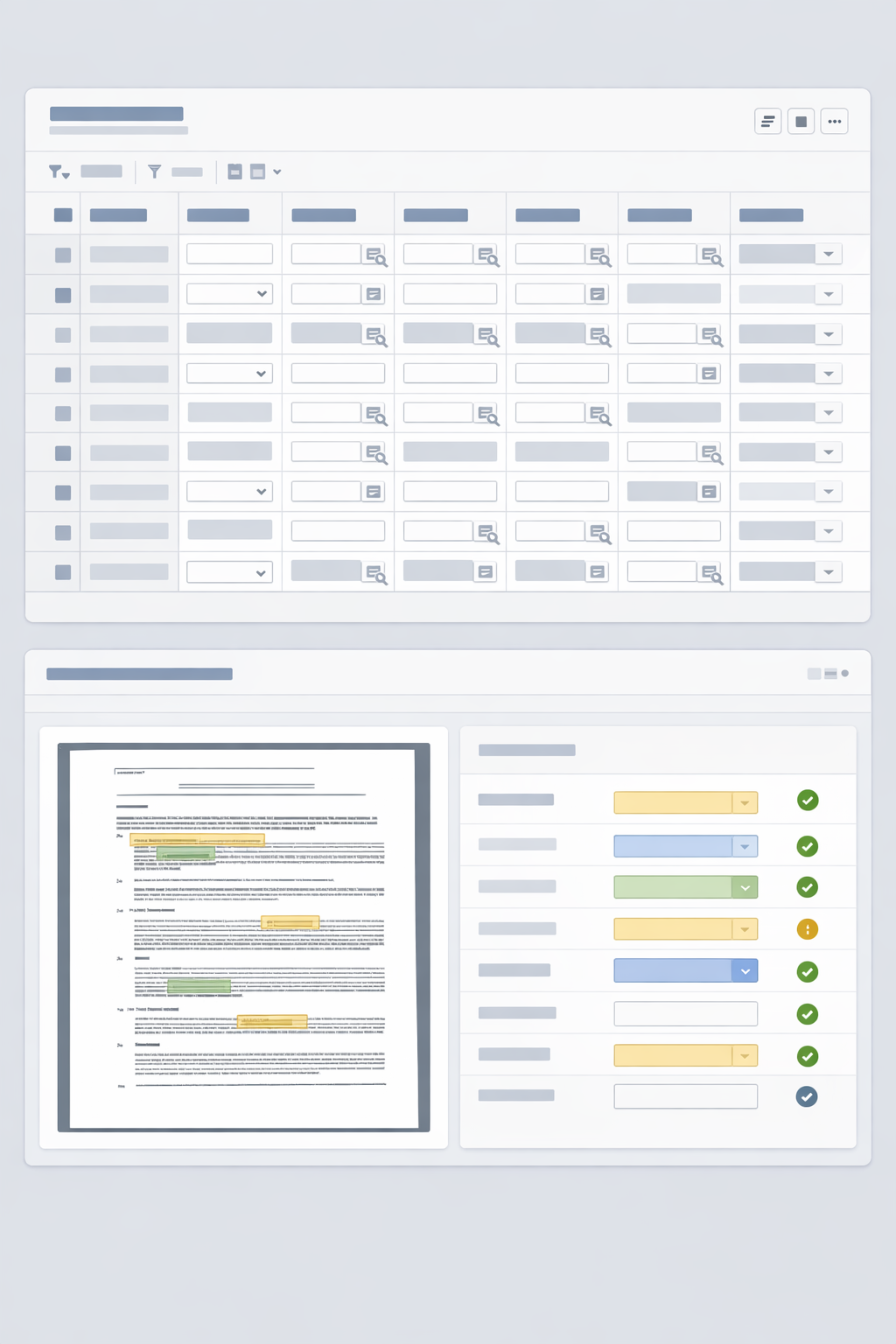
- Abstract the CAM terms into a structured grid. Capture each clause listed above, with a reference back to the clause and page, and check amendments for any term that changed.
- Run the reconciliation against the abstracted terms in your own tools. Compare each tenant's allocated share, cap math, gross-up and fees with what the lease allows.
- Review only the exceptions. Flag lines where the reconciliation differs from the lease or where a term is ambiguous, and send them to the right person on your team.
- Record sign-off. Keep a record of who approved each reconciliation, so the next year's audit starts from a clear history.
Elysium handles steps 1 and 2. Elysium connects to Google Drive, Dropbox, SharePoint, Box and Egnyte to bring in leases and amendments, organizes uploaded documents, and it extracts CAM terms such as pro rata share, caps and fees as Key Points you can review and export, with references back to the lease so reviewers can check the source. Your team can also ask questions across the lease documents and get answers with references. The reconciliation, the exception review and the sign-off in steps 3 to 5 stay with your team, in your own tools.
If your team is still deciding on tooling, our CAM reconciliation software buyer's guide covers what to look for, and lease abstraction tools compared walks through the main options.
Common CAM audit findings
These issues come up again and again in landlord-side reviews:
- A pro rata share that was never updated after an expansion or remeasurement
- A base year that was reset at renewal but not in the billing system
- Caps applied to all expenses instead of controllable expenses only, or started from the wrong year
- Capital costs passed through in full instead of amortized as the lease allows
- Management fees calculated on a broader base than the lease permits
- One exclusion list applied to every tenant in the property
- Statements sent after the lease's delivery deadline
Many of these are also places where recoveries leak in acquisitions. Our post on opex pass-through leakage in CRE acquisitions covers how to catch them during due diligence.
Building a repeatable annual process
Treat the CAM audit as a standing part of year-end close rather than a one-off project:
- Keep the abstracted lease terms current as amendments are signed, not only at reconciliation time.
- Track each tenant's statement deadline and audit window on a shared calendar.
- Keep backup for every recoverable category ready to share if a tenant requests an audit.
- Carry forward last year's exceptions and their resolutions so recurring issues get fixed at the source.
With terms abstracted and referenced back to the lease, each year's audit becomes a review of what changed and what was flagged, rather than a fresh read of every lease.
Frequently asked questions
Lease terms and calculations
What is a CAM audit?
A CAM audit checks the common area maintenance and operating expense charges billed to each tenant against what the tenant's lease allows, including pro rata share, base year, caps, gross-up, exclusions, admin fees and deadlines.
Which lease clauses matter most in a CAM audit?
Pro rata share and its denominator, base year or expense stop, caps and the definition of controllable expenses, gross-up, the exclusion list, administrative or management fees, and the statement and audit-rights deadlines.
How do caps on controllable expenses affect a CAM audit?
Caps usually limit year-over-year increases in controllable expenses only. The audit needs to confirm the cap percentage, starting year, whether it is cumulative or non-cumulative, and compounding or simple, and which categories the lease treats as controllable before recomputing the capped amount.
Audit rights and timing
When should landlords audit CAM charges?
Before annual reconciliation statements go out. Catching errors internally reduces refunds, audit cost shifts and disputes, and finds under-billed expenses that would otherwise go unrecovered.
How long do tenants have to audit CAM charges?
It depends on the lease. Many leases give tenants between 60 days and a year after receiving the annual statement to object or request an audit. Track each tenant's window as soon as the lease is abstracted.
Who pays for a CAM audit?
Usually the tenant pays, unless the audit finds an overcharge above a threshold set in the lease, often around 3% to 5%. In that case the landlord typically reimburses the audit cost.
Software and automation
Can CAM charge auditing be automated?
Partly. Software can gather lease files and abstract CAM terms into a structured grid with references back to the lease. Your team then compares the reconciliation against those terms in its own tools and reviews the lines that don't match.
How does Elysium help with CAM auditing?
Elysium connects to Google Drive, Dropbox, SharePoint, Box and Egnyte, organizes uploaded lease documents and extracts CAM terms such as pro rata share, caps and fees as Key Points you can review and export, with references back to the lease so reviewers can check the source. Your team runs the reconciliation, exception review and sign-off in its own tools.